


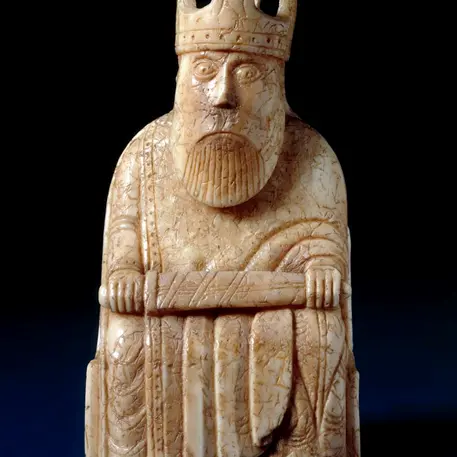
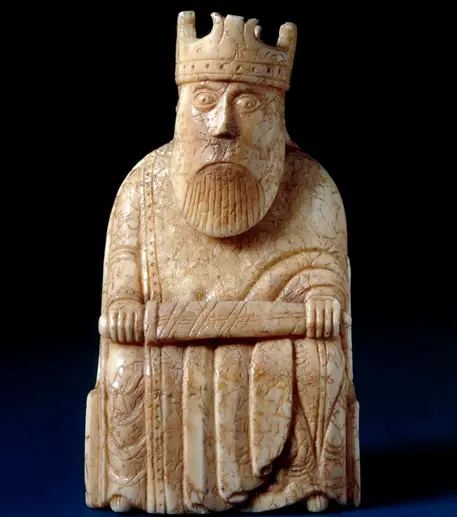
In 1831, a major chance discovery was made on the Isle of Lewis, in Scotland's Hebrides archipelago, when some sixty pieces of a chess set dating back to the Middle Ages were unearthed. They had once been grouped together in a stone box built into a sandbank on the coast.
These objects, currently divided between the British Museum in London and the National Museum of Scotland in Edinburgh, were carved from walrus ivory at the end of the twelfth century, probably in a city in Scandinavia.
All the chess pieces are represented: kings, queens, bishops, rooks, knights and pawns. The figurines display an inventive decorative repertoire and a singular expressiveness.
This exceptional discovery is an invitation to draw up a partial inventory of the medieval chess pieces that are known today, and to consider the role of this game in the society of the time. For while chess is a playful pastime that requires good intellectual skills, it also has a symbolic and mythical dimension that goes all the way back to Antiquity.
These objects, currently divided between the British Museum in London and the National Museum of Scotland in Edinburgh, were carved from walrus ivory at the end of the twelfth century, probably in a city in Scandinavia.
All the chess pieces are represented: kings, queens, bishops, rooks, knights and pawns. The figurines display an inventive decorative repertoire and a singular expressiveness.
This exceptional discovery is an invitation to draw up a partial inventory of the medieval chess pieces that are known today, and to consider the role of this game in the society of the time. For while chess is a playful pastime that requires good intellectual skills, it also has a symbolic and mythical dimension that goes all the way back to Antiquity.
Uurroosters
Uurroosters
De 2 februari 2026
- 14:30
- 17:00
De 3 februari 2026
- 18:30
De 5 februari 2026
- 20:00